
This content is for informational purposes only and does not constitute legal advice or create an attorney-client relationship.
Installing solar panels and a backup generator should give you greater peace of mind, especially if you have experienced a major power outage. However, when an installer fails to provide support, equipment stops working, and promised savings never materialize, your solar investment can become a significant financial burden.
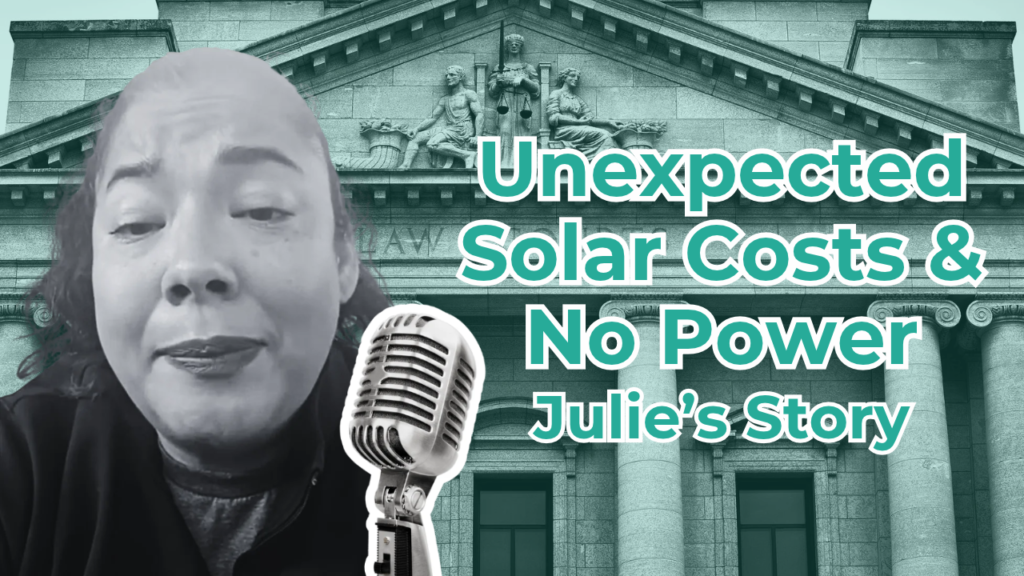
That is what happened to Julie, a Texas homeowner who turned to Prevost Law Firm after struggling with problems involving her solar panel system and generator. After nearly two years of dealing with unexpected expenses, poor customer support, and financial stress, Julie finally reached a resolution in her case.
Her experience highlights several warning signs that solar customers should understand, along with steps you can take if your own solar installation has left you feeling stuck.
When a Promising Solar Installation Goes Wrong
Julie chose South Texas Solar, a San Antonio-based installer, after evaluating three companies. The company presented an impressive sales pitch, showed examples of its previous work, and referenced a recognizable grocery chain as a client. Its financing terms also seemed attractive.
Want Help From The Law Firm Solely Focused on Solar Panel Lawsuits?
Click below and complete the form to learn more.

After experiencing a hurricane that left her family without power for a week, Julie wanted a more reliable backup power solution. The installer offered a generator alongside the solar panel system, which seemed like a practical way to prepare for future outages.
Unfortunately, the experience did not meet her expectations.
Less than seven months after installation, a period of extreme heat caused a power outage in her area. Julie contacted the installer for help, expecting the company to provide the support she needed. Instead, she struggled to get a response.
As she investigated the problem, she discovered that the generator had not received the required permit. Getting it repaired required an unexpected expense of more than $1,200 for a plumber.
The family even contacted its municipality to determine whether the problem originated on the utility or local government side. However, that investigation did not resolve the issue.
Julie also learned something important about her solar system: standard grid-tied solar panels generally shut down during a power outage unless the system includes the appropriate backup equipment and configuration. Although she had purchased a generator, she had not received the reliable backup power experience she expected.
For a family with a newborn, losing power during extreme heat made an already frustrating situation even more difficult.
Poor Customer Support and Equipment Problems Added to the Stress
The generator was only one part of the problem.
Over the first two years, Julie experienced additional issues with her solar panel system. The installer did not respond to requests for the panel cleaning promised under the contract. An inverter also stopped communicating with the system, interrupting production from approximately two panels.
Julie spent nearly a year trying to resolve these concerns directly with the installer. Yet, repeated emails and requests for assistance did not produce the support she needed.
Instead of having a reliable point of contact, she felt passed from one person to another. The salesperson who initially helped her purchase the system redirected her calls, leaving her to chase answers from a company that had once seemed dependable.
When a company makes promises during the sales process, you reasonably expect it to help address problems after installation. When that support disappears, even relatively manageable equipment issues can become a source of ongoing stress.
Julie described feeling like she had become just another installation number rather than a customer whose concerns mattered.
If you are experiencing similar problems, keep records of every service request, unanswered email, equipment failure, and attempt to resolve the situation. These details may help you understand what went wrong and evaluate your options.
Unexpected Solar Costs Can Undermine the Financial Benefits
For Julie, the financial consequences extended beyond repairs and maintenance.
She had expected to receive a substantial tax benefit early in the process, based on how the potential savings had been presented during the sale. However, she later realized that the tax benefit would not provide the immediate lump sum she had anticipated.
Tax credits do not necessarily work like upfront rebates. Eligibility, the amount available, and when you can benefit from a credit depend on the applicable rules and your individual circumstances. Therefore, you should carefully verify tax-related claims before relying on them to cover a large payment.
Because Julie had planned her finances around the expected benefit, the difference between her expectations and reality created additional pressure.
Meanwhile, her electricity bill did not decrease as much as she had anticipated. She was still making payments on her solar system while continuing to pay her utility company, particularly during the hot Texas summers when electricity use increased.
Instead of delivering the financial relief she expected, the system added another significant expense to her household budget.
If your solar payments remain high while your electricity bills continue, you are not alone in facing this concern. However, the right next step depends on your contracts, the system’s actual performance, the representations made during the sale, and the circumstances surrounding your purchase.
How Julie Found Prevost Law Firm
After months of unsuccessful attempts to resolve the problems, Julie began researching her consumer rights online.
During that search, she came across an advertisement for Prevost Law Firm on Facebook. She also read comments from people discussing the firm’s services, which encouraged her to reach out.
Julie received a phone call that evening and spoke with J. Neal Prevost and another member of the team. She felt that they understood the types of sales practices and financing concerns she had experienced.
That initial conversation helped her feel comfortable moving forward.
Prevost Law Firm pursued a case against Julie’s lender. Because the settlement agreement restricts the disclosure of certain details, the specific lender and settlement terms cannot be shared publicly.
However, Julie expressed that she was very happy with the outcome. She felt the resolution brought her closer to where she had expected to be when she originally entered into the agreements.
Most importantly, she looked forward to moving ahead without the same concerns that had weighed on her household.
Is It Worth Pursuing a Solar Panel Claim?
One question homeowners often ask is how long a solar panel case might take.
Julie first contacted Prevost Law Firm around August 2024. Her case reached a resolution approximately 24 months later.
Every case follows its own timeline. The length of the process can depend on the facts, the parties involved, the legal issues, and the steps required to pursue a resolution. No attorney can promise that every case will follow the same schedule or reach the same outcome.
For Julie, though, the wait was worthwhile.
She explained that she knew other consumers were likely experiencing similar problems. She also felt the process had required less of her time, effort, and money than she had initially feared.
Her experience serves as a reminder that you do not have to assume a difficult solar contract is something you must simply accept. Depending on the facts, you may have legal options worth exploring.
What Should You Do If Your Solar Company Has Let You Down?
If your solar installation has created financial or technical problems, consider taking these practical steps:
- Gather your paperwork. Collect your solar panel contract, financing documents, sales materials, warranty information, and any agreements related to a backup generator.
- Document the problems. Keep copies of emails, service requests, repair invoices, utility bills, and communications with the installer or lender.
- Write down what happened. Create a timeline of important events, including promises made during the sale, installation problems, equipment failures, and attempts to obtain help.
- Review the financial impact. Note unexpected expenses, ongoing loan payments, utility costs, and any savings or tax benefits that differed from what you expected.
- Explore your legal options. If the installer or lender has not addressed your concerns, consider speaking with a law firm that handles solar panel contract disputes.
You do not need to have every answer before asking for help. Organized records can make it easier to explain your situation, but you can begin by sharing what you know and allowing the legal team to ask follow-up questions.
Get Help With Your Solar Panel Problems
Julie offered one final piece of advice to homeowners who may be dealing with similar circumstances: do not wait to seek help. Write down what happened, gather your paperwork, and ask questions about your options.
If your solar installer failed to deliver what you were promised, your equipment does not work as expected, or your financing agreement has become a source of financial stress, you deserve an opportunity to understand your rights.
Contact Prevost Law Firm today for a no-cost claim review. The team can review the details of your situation, ask questions about your solar panel agreement, and help you understand whether you may have a claim involving your installer or lender.
You do not have to keep chasing an unresponsive company or wonder whether you have any options. Take the first step toward understanding your rights and finding a path forward.
This content is for informational purposes only and does not constitute legal advice or create an attorney-client relationship.


