This content is for informational purposes only and does not constitute legal advice or create an attorney-client relationship.
What happens when you end your solar agreement after a legal dispute or lawsuit concludes?
The abrupt Titan Solar bankruptcy alone affected over 150,000 customers across 22 states, leaving tens of thousands of homeowners scrambling for answers about their systems and loan obligations. Over the past five years — from 2021 to 2026 — the U.S. solar industry has experienced one of its most severe contraction periods, with over 100 major solar companies filing for bankruptcy or shutting down in 2024 alone.
Whether your solar company goes out of business or your case wraps up, understanding what happens to your solar agreement is critical.
Dealing with the Aftermath
Are you ready to end your solar agreement? Most consumers have existing issues upon conclusion of their case. This can range from mildly underperforming systems to systems that never received permission to operate or were never turned on. It also includes consumers with property damage and drastic roof leaks made worse by an individual’s inability to financially manage such enormous challenges.
Once your solar case is over and it’s your turn to end your solar agreement, you might be feeling a little lost. After all the time and energy spent thinking about your legal battle, when it ends you might be feeling like you’re not sure what to do next.
Want Help From The Law Firm Solely Focused on Solar Panel Lawsuits?
Click below and complete the form to learn more.

In this guide, we’ll walk you through what happens if your solar company goes out of business, whether you can cancel your solar contract, and how to terminate a solar contract properly while managing your system going forward.
Getting a Settlement Offer
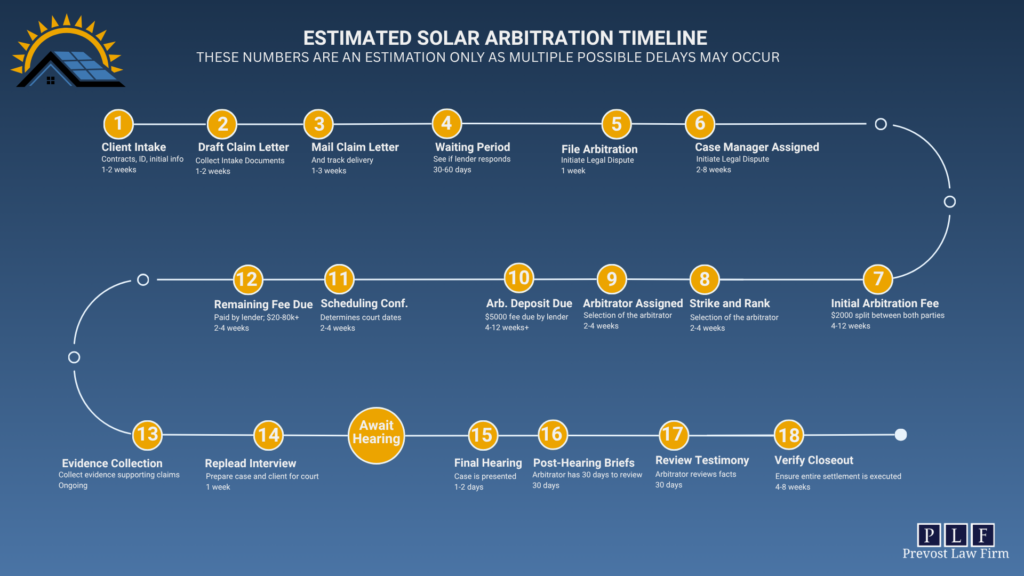
Before we get into resources for consumers whose legal battles have concluded to end your solar agreement, let’s review the steps that happen leading up to case closure.
Settlement Agreement (SA) Execution
Once you sign your settlement agreement, there are a few steps left to fully executing a settlement agreement. First, a client signs. The agreement is then sent to opposing counsel to sign, and finally the settlement agreement becomes “executed” once both parties have signed. The executed agreement is then returned to the client’s counsel.
Disbursement
If a settlement agreement involves any funds at all from opposing counsel, the funds must be disbursed using a disbursement form. This is the point at which Prevost Law Firm (PLF) would write any check to the client owed from the lender.
Non-Monetary Awards
- If your settlement included credit correction, we ask that you monitor your credit report to identify when the loan has been removed.
- If your settlement included loan reduction or cancellation, we will ask you to monitor your loan portal to see it is zeroed out.
- If your settlement included lien removal, the lender would notify PLF once this has been done.
- PLF is here to support you through the entire settlement execution, so please be communicative and know we are here for you until the end.
What Happens to Your Solar Panels After You End Your Solar Agreement
Homeowners often worry about repossession after resolving their solar case. Lenders have a right to reclaim the panels, but this rarely happens. The cost of removing and reselling a used solar system far exceeds its actual value. Once homeowners install and use solar panels, the panels usually have little to no resale market. That makes it financially impractical for lenders to retrieve them.
As a result, most homeowners keep their solar panels after winning their case. If the lender previously disabled the system due to non-payment, the homeowner can often reactivate it easily. In some situations, lenders place a physical lock on the system. In newer installations, lenders may remotely disable the system by shutting off essential components.
Even then, if the court voids the loan, the lender no longer has a security interest in the panels. The lender would remove the lien, and the homeowner would no longer owe the debt. At that point, homeowners could safely restore their system.
The legal classification of solar panels works in your favor. Courts have determined that financed residential solar systems are consumer goods, not fixtures. The panels can be removed without damaging the roof or other parts of the house since they’re simply bolted on and can be unbolted. This classification means that if you’ve already paid for your system in full, those panels are yours. Bankruptcy doesn’t transfer ownership back to the company once the sale is complete.
Steps to Take When You End Your Solar Agreement
When considering how to end your solar agreement, securing your documentation becomes the first priority. Gather every piece of paperwork from your solar installation, namely the installation contract, equipment specifications, manufacturer warranties, permits, and inspection reports. Your original contract typically contains a summary of all equipment and workmanship warranties.
Contact your original installer to obtain copies of any missing records. The installation company keeps detailed records of the equipment they used and the workmanship period they guaranteed. If your solar company goes out of business, reach out directly to the manufacturer. Component manufacturers can confirm coverage based on your product serial number.
Perform a system health check to identify immediate issues. Inspect the panels for visible damage such as cracks. Check your inverter for error codes or warning lights that indicate faults. Pull your monitoring system’s performance data to confirm current energy output levels.
Accordingly, you need a new service provider if the original installer is unavailable. Look for companies experienced in servicing systems they didn’t install. Request written confirmation of your buyout price, transfer terms, or any exit options from your solar company or lessor before making decisions. Do not rely on verbal promises because the company is unlikely to honor them.
Managing Your Solar System Going Forward
Monitoring your system’s output becomes your primary ongoing responsibility. Track performance ratio and availability monthly for smaller systems, more frequently for larger installations. A performance ratio of 85% and availability of 95% should be achievable under normal operating conditions. We consider systems operating within 80% of their weather-corrected performance ratio to be normal.
Professional inspections every one to two years prevent minor issues from escalating into costly repairs. Schedule an inspection near the end of your workmanship warranty period, typically between five and ten years, to catch problems while labor coverage remains active. These inspections cost around a couple of hundred dollars but can prevent equipment failure or fire hazards.
Use only manufacturer-certified technicians for all repairs and maintenance. Any work performed by uncertified companies voids your warranty. If your installer closed, contact your equipment manufacturer directly. They can recommend local authorized service providers. Manufacturers like SolarEdge, Enphase, SMA, FIMER, and Fronius maintain independent warranties that survive installer bankruptcy.
Operations and maintenance plans offer additional coverage for site visits, pest control, cleaning, and inverter maintenance. While warranties typically cover replacement parts, labor and shipping costs often fall on you. Accordingly, review whether your warranty includes labor reimbursement before planning maintenance expenses.
Maintaining or Replacing Warranty Support When You End Your Solar Agreement
After the conclusion of your case, many clients find that their original warranty is no longer valid or enforceable, especially if the original installer has gone out of business. To keep your solar system covered, most homeowners need to obtain a replacement warranty. You can do this in several ways:
- Find a New Local Installer: You can hire a reputable local solar installer to inspect, repair, or upgrade your system and issue a new warranty for their work. This approach often provides the most direct and long-term coverage.
- Find a Roof Company: If your system’s installation involved roof work or other structural elements, a roofing company or another qualified installer can sometimes provide a new warranty for their portion of the system.
- Make an Insurance Claim: In some cases, you may be able to file a claim with your homeowner’s insurance. The insurance company may hire a licensed installer to make necessary repairs or replacements, and that installer can issue a new warranty.
By taking one of these steps, you can protect your investment and ensure continued coverage, even if the original installer or warranty provider is no longer available.
Widely Available Solar Services
The below options are widely available across the United States and can help offer service options to replace your lost warranty.
Solar Insure: Founded in 2006, it is refreshing to see a solar-related business with some longevity.
Solar Insure – Nation’s Leading Solar & Storage Warranties
Conserva Now: Utilizes a network of Energy Professionals to offer warranty and services nation-wide.
Your Energy Ownership Experience | Home Energy Assessment | Conserva
Closing the Loop: Non-Solar Resources When Your End Your Solar Agreement
Before you mentally move on, you may want to address the following pending questions. PLF are not experts in the following areas and the appropriate individuals should be consulted for each item below.
House Buyers (to buy as-is): Has your house been damaged to the point you cannot afford to repair it? House buying companies can offer financial relief and a quicker path to selling your home.
Real Estate Agents: Have you been waiting to move until the end of your case? Are you looking to downsize or start over? You can even choose to relocate the panels once your loan has been paid off.
Bankruptcy / Debt Consolidation: What debts (if any) remain? If you only received a loan reduction, or if you have debt in addition to your solar debt that you are still not able to overcome, bankruptcy can be a great option to a clean slate.
Additional Financial Implications: Are there tax implications? Did the removal of the debt affect your credit score? Consult with tax professionals and monitor your credit to stay aware of the consequences of any settlement terms.
DTPA Attorney: If you have remaining debt, an in-business installer, or additional claims your previous case did not address, it is possible you might be able to pursue justice with a differne ttype of attorney.
Mental Health Resources: Legal battles are taxing, physically and mentally. The strain can keep consumers awake at night for months or years during the ongoing battles they face. Be sure to monitor your thoughtlife and seek help if you need it.
Comprehensive List of Solar-Related Services to Consider Upon Case Closeout
Here’s a breakdown of the types of services that are often useful once a solar case is concluded, especially when your system’s original installer is out of business or your warranty is no longer valid:
1. Solar System Inspection & Repair Services
- A licensed solar installer can inspect your system to ensure all panels, inverters, wiring, and connections are working properly.
- They can repair or replace any malfunctioning components.
- This is often the first step before securing a new warranty.
2. New Warranty Providers Once You End Your Solar Agreement
- Some installers offer new “post-sale” warranties on systems they inspect or repair.
- This can give you coverage similar to what the original warranty promised.
3. Roofing or Structural Services
- You might need a roofing contractor may to inspect or repair penetrations, mounts, or flashing on roof mounted systems.
- They may also provide warranties covering their work, protecting against leaks or structural damage.
4. Insurance Assistance After You End Your Solar Agreement
- Homeowner’s insurance can sometimes cover repair or replacement costs for damaged systems.
- The insurance company may hire a certified installer, giving you a new system and a new warranty through their contractor.
5. Monitoring and Maintenance Services
- Some companies offer ongoing monitoring to track panel performance, detect issues early, and perform routine maintenance.
- This ensures your system continues to generate electricity efficiently even without the original warranty.
6. Energy Audit Services
- An energy consultant can check whether your system is performing as expected.
- They can recommend efficiency improvements, battery add-ons, or system upgrades.
7. Financing or Incentive Guidance
- Secure financing or apply for available rebates or tax credits to make additional repairs or upgrades.
Conclusion
Reaching the end of your case is a major milestone, but there may still be a few important steps to finish the process. Continue monitoring credit reporting, liens, loan balances, or other ongoing obligations making sure the final result is properly carried out.
Do not ignore follow-up requests from your attorney or the other parties. Staying organized, responsive, and informed helps protect the outcome you worked hard to achieve.
You now have everything you need to manage your solar system after your case concludes. To be sure, the panels on your roof are likely yours to keep, and with proper documentation and maintenance, they’ll continue generating value for years.
From now on, focus on tracking your system’s performance and scheduling regular inspections with certified technicians. Your solar investment can still deliver the savings you originally expected. Stay proactive, and your panels will keep working for you.
This content is for informational purposes only and does not constitute legal advice or create an attorney-client relationship.