This content is for informational purposes only and does not constitute legal advice or create an attorney-client relationship.
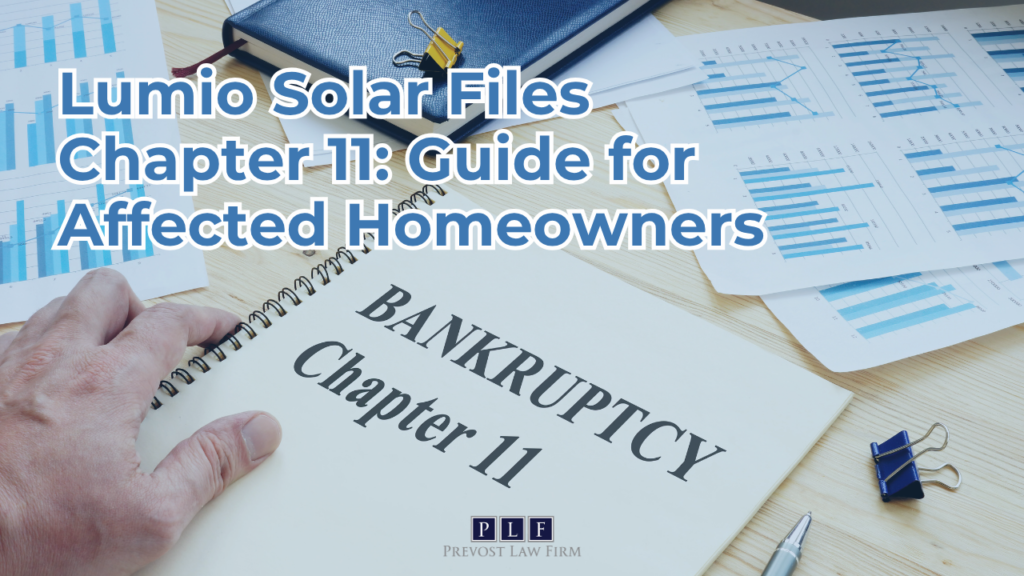
Lumio Solar recently filed for Chapter 11 bankruptcy on September 4th, 2024, leaving thousands of homeowners uncertain about the future of their solar systems. Unfortunately, what started as a restructuring effort quickly escalated when the company converted from Chapter 11 to Chapter 7, culminating in an asset sale to Zeo Energy that was approved by the court on November 1st.
For homeowners across the 16 states where Lumio operated, this bankruptcy raises serious questions about warranty coverage, ongoing maintenance, and system reliability.
We understand the confusion and concern many customers are experiencing during this transition. The Lumio solar bankruptcy has created particularly troubling warranty uncertainties, as manufacturer and workmanship guarantees might become void or challenging to claim without the original installer. If you’re wondering “is Lumio solar still in business?” or “what happened to Lumio solar exactly?”, you’re not alone. Although Zeo Energy has acquired certain assets, not all customer accounts were transferred, leaving many homeowners without clear support options.
In this article, we’ll explain what these developments mean for you and outline concrete steps you can take to protect your solar investment.

History of Lumio Solar
Many homeowners are surprised to learn that the solar company they originally signed with may have gone through multiple name changes or mergers, making it even harder to know who is responsible when problems arise. For example, Zenith Solar, a Texas-based installer, later rebranded as DECA Solar, and was eventually absorbed in April 2023 into the larger national brand Lumio, which was formed by combining several regional solar companies.
The shift of responsibility between Zenith, DECA, and Lumio has left many homeowners confused and unsupported, often with no clear path to warranty coverage or system repairs. After the bankruptcy, countless customers were left without resources or accountability, forced to navigate complex problems on their own.
Lumio Files Chapter 11 and Converts to Chapter 7
The residential solar provider’s financial troubles became public knowledge when Lumio Holdings Inc. submitted voluntary petitions for Chapter 11 bankruptcy in the Delaware bankruptcy court on September 3, 2024. This move came less than four years after the company’s creation through the merger of four regional solar providers and a software company.
What Chapter 11 and Chapter 7 mean for businesses
Chapter 11 bankruptcy, often called “reorganization” or “rehabilitation,” allows corporations to restructure their debt while continuing operations.
Under this arrangement, Lumio could keep functioning under court supervision while attempting to stabilize its finances. Conversely, Chapter 7 bankruptcy represents “liquidation,” where a business closes completely and sells off assets to pay creditors.
During the bankruptcy proceedings, Lumio’s attempts to restructure their debt fell through. This was due to failed negotiations, and they were forced into Chapter 7 bankruptcy instead. This happens when businesses in bankruptcy have trouble selling their debt and are unable to come out of Chapter 11 bankruptcy.
Homeowners Lose Warranty and Service Support on Lumio Solar Systems
The fallout from Lumio’s bankruptcy extends beyond business operations. It directly affects homeowners who now face significant uncertainty regarding their solar systems’ warranty coverage and maintenance.
What happened to Lumio Solar warranties?
Typically, when solar companies like Lumio declare bankruptcy, workmanship warranties become void or extremely difficult to claim. These warranties, which protect against improper installation and home damage, generally last 10 years. Fortunately, equipment warranties from manufacturers remain intact regardless of Lumio’s status. These component warranties usually cover 25 years for panels and inverters and 10 years for batteries.
However, even if your equipment is still covered under a manufacturer’s warranty, you will need an installer to actually perform the repairs or replacement. In many cases, this means the responsibility falls back on the homeowner to find an installer willing to service the system. This is something that can be challenging after the original company has gone out of business.
Impact on ongoing maintenance and repairs
Homeowners with Lumio service contracts for routine maintenance and repairs face disruption as these agreements often collapse during bankruptcy proceedings. Consequently, many customers must now pay out-of-pocket for system problems. Unfortunately, customer service operations have slowed substantially, making it difficult to resolve even minor issues.
How to check if your Lumio Solar system is covered
To determine your warranty status:
- Review your original contract for warranty details
- Gather documentation of all service contracts and payments
Next Steps for Lumio Solar Customers
With Lumio solar bankruptcy now finalized, affected homeowners have legal options to explore. Here’s what you need to know about pursuing compensation:
Why Prevost Law Firm Prefers Arbitration
For most solar disputes, customers must use arbitration. Arbitration is a private resolution process where a neutral third party makes a binding decision. This process typically resolves faster than court cases but limits certain legal options.
Most solar lawsuits are not true class actions because almost every solar installation contract has a mandatory arbitration clause.
Arbitration clauses block participation in class actions and instead require disputes to be handled one-on-one in arbitration.
Prevost Law Firm’s entire model is built around representing clients through arbitration, because that’s where most of these cases actually get resolved.
The firm focuses exclusively in solar panel lawsuits and has extensive experience holding companies accountable. Previously, they joined with 22 state Attorneys General to protect consumer rights in another solar bankruptcy case.
Get a No-Cost Case Review
Prevost offers a complimentary claim evaluation through a simple form that helps determine if you have a valid case. This removes financial barriers for homeowners already experiencing strain from problematic solar contracts.
Conclusion
The Lumio Solar bankruptcy case undoubtedly represents a cautionary tale for both the solar industry and homeowners alike. Throughout this difficult transition, thousands of customers have found themselves caught between bankruptcy proceedings and uncertain warranty status. Nevertheless, affected homeowners still have several viable paths forward despite these challenging circumstances.
We understand the frustration and uncertainty many homeowners currently face. The promises of clean energy savings should never come with unexpected financial burdens or service disruptions. Above all, gathering and preserving all documentation related to your Lumio system will prove essential for warranty claims, legal proceedings, or service arrangements with new providers.
The residential solar industry continues evolving rapidly, yet this situation highlights the importance of company stability when making such significant home investments. Despite these setbacks, your solar system still generates clean electricity and home value. Taking proactive steps now will help safeguard your renewable energy investment for years to come.
This content is for informational purposes only and does not constitute legal advice or create an attorney-client relationship.