This content is for informational purposes only and does not constitute legal advice or create an attorney-client relationship.
Solar panel lawyer consultations have gained popularity as homeowners find the harsh truth behind those enticing sales pitches. Their solar panel investments failed to deliver promised savings, which leaves many homeowners searching for legal remedies.
This story repeats itself too often. Solar companies make bold promises about panel installation benefits and potential savings. Your monthly utility bills might stay high or climb even after installation.
You might ask yourself, “Can I sue my solar company?” or “How do I find a lawyer for solar panels?” Your case’s timeline and documentation will determine the answer. Hidden fees or undisclosed costs in your agreement could give you grounds for a solar panel lawsuit.
This article helps you determine the right moment to talk to a solar attorney. Your solar power system’s poor performance means extra electricity costs that add up quickly. Legal action taken at the right time can stop ongoing financial losses and help you get back what you deserve.

When to Question Your Solar Panel Agreement
You can save thousands of dollars by spotting warning signs in your solar panel agreement early. Many homeowners find their solar systems perform way below the levels promised during sales talks.
- Super low interest rates: Extremely low rates can sometimes signal predatory or deceptive loan terms.
- System never turned on: If your system has never been activated or you’ve gone more than 12 months without PTO (permission to operate), that’s a red flag.
- Workmanship warranty breaches: If your installer ignores workmanship warranty claims for over 60 days, they may be in breach, giving you a stronger legal position.
- Installer or lender bankruptcy: If your lender or installer goes out of business, it’s critical to investigate your contract and explore your legal remedies. We offer a no-cost case review to help.
- Roof leaks: If leaks began after your solar installation and your installer denies responsibility, despite no leaks beforehand, you may have a valid claim.
- High or increasing bills: If your electricity bill suddenly jumps without any change in how much power you use, something may not be right.
What to Do Before Contacting a Lawyer for Solar Panels
Smart preparation can really strengthen your case before you rush to a solar panel lawyer. Start by taking a good look at your solar contract. You need to understand all terms, including pricing structures, warranty provisions, and cancelation policies. Watch out for arbitration clauses that could limit your legal options.
Your documentation needs to be rock solid. Put together a detailed file with everything you have. Include all your written exchanges with the solar company, original contracts and financing papers. Don’t forget to save screenshots of their advertising claims. Keep your utility bills from before and after installation, and write down your timeline of events.
Please remember: if you do not record your phone calls, you will not be able to submit the phone calls as evidence. Emails and written records are the easiest evidence to submit for a case. Reference your state laws for the legalities regarding recorded calls.
Your system’s performance matters a lot. Track any problems with installations that haven’t delivered what was promised. Keep records of every system failure, each repair attempt, and any extra costs you paid.
Send the company a written request that spells out your concerns and what you expect them to fix. This shows you tried to solve things the right way first.
Note: some installation contracts have specific instructions on how you’re supposed to submit your warranty claims. For example, if the contract states a letter must be mailed, then an email or phone call will not be sufficient. Be sure to follow any specific instructions in your installation contract for making warranty claims.
Should you stop making payments?
Even if your solar system isn’t working as promised, and while we support whatever decision our clients make, you probably will want to continue making payments.
Missing payments can hurt your credit, trigger collections, or even weaken your legal case. Instead, document the problems, file warranty claims in writing, and seek legal guidance to explore your options. Taking the right legal steps keeps you protected while we work to hold lenders and installers accountable.
Read more here.
When to Call a Solar Panel Lawyer: Legal Timeline for Homeowners
Suing a solar company needs you to know about critical deadlines. Most states have strict statute of limitations on solar panel lawsuits. Texas allows three years to file fraud claims and four years for breach of contract claims. Oklahoma’s deadline stands at two years after finding the misrepresentation, while written contract claims give you five years. Prevost Law Firm focuses on breach of contract cases which have a 4-year statute of limitations based on when the installer was identified as going out of business.
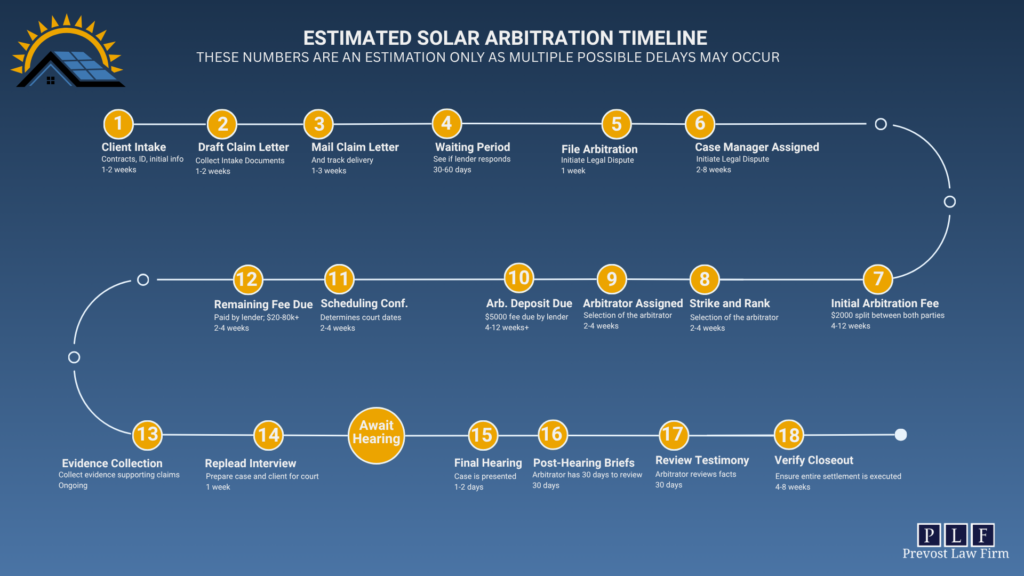
Your legal journey starts with a mandatory 60-day letter to the solar company. This formal notice lets them fix issues before things escalate. If they don’t resolve the problem, you must file for arbitration right after this period. The whole ordeal can last anywhere from several months to over a year based on your case’s complexity.
Quick action becomes crucial when you find a UCC lien on your property without proper disclosure. These liens show up as “attached to real estate” because solar panels count as fixtures and can complicate your home sale. Note that delays hurt your chances to file a lawsuit and make gathering evidence harder.
Legal help becomes especially important when you have elderly consumers targeted by the company’s predatory tactics. A solar panel lawyer can often accelerate these cases due to age factors. An experienced solar attorney remains your best choice when dealing with contract breaches or fraudulent practices.
Conclusion
Swift action and detailed documentation play key roles in handling solar panel disputes. Red flags in your agreement should prompt immediate questions. Your system’s poor performance can hit your wallet hard, especially when payment increases outpace normal utility costs.
Strong evidence builds your case better than rushing into legal action. Your first steps should focus on contract reviews, communication records, and direct resolution attempts with the company. Legal claim timelines vary by state and type, making them a vital part of your strategy.
Delays in taking action put your legal options at risk and drain your finances further. Solar energy investments should deliver the promised benefits from the sales process. A solar attorney can help you recover losses when good-faith resolution attempts fail.
Solar energy brings great benefits, but some companies use questionable sales tactics. Your investment’s protection demands constant attention from the sales pitch through your system’s lifetime. This piece gives you the knowledge to make smart choices about getting legal help for your solar panel issues.
This content is for informational purposes only and does not constitute legal advice or create an attorney-client relationship.