This content is for informational purposes only and does not constitute legal advice or create an attorney-client relationship.
For most homeowners, paying off a mortgage is a milestone worth celebrating. It marks financial freedom, stability, and the chance to finally live in a home that is truly debt-free. But if you financed solar panels that you no longer want, or that have become a burden, things can get complicated very quickly.
At Prevost Law Firm, we’ve seen many families reach the finish line of paying off their house, only to realize that their solar loan throws a wrench into the process. The wrong move can weaken your legal position, limit your options for relief, or even force you to give up the panels altogether.
This guide explains what to consider before you pay off your house if you have financed solar panels you don’t want, and why speaking with a lawyer before making payments may protect your rights.
Why Solar Loans Complicate Paying Off Your Home
When you take out a solar loan, the lender often secures their interest in your property by filing a UCC-1 lien or other encumbrance. This is not a lien on your house exactly; but just on the address attached to your solar installation.
Want Help From The Law Firm Solely Focused on Solar Panel Lawsuits?
Click below and complete the form to learn more.

That lien has to be cleared before you can:
- Refinance your mortgage
- Transfer your home to a new owner
- Pay off your mortgage and hold the title free and clear
The problem arises when homeowners want to get rid of their solar panels or fight back against predatory contracts. If you rush to pay off your loan or mortgage, you may unintentionally give up leverage that could have helped you resolve the dispute.
Read more about UCC liens here.
The Risk of Paying Off the Loan Too Early
One of the biggest mistakes we see is homeowners paying off the solar loan (or their home loan) too quickly. Here’s why that can be a problem:
- You can’t transfer or refinance the debt. If you sell your home or refinance your mortgage, the solar loan usually must be resolved. One way forward is a payoff. That payoff removes your ability to argue for cancellation, settlement, or reduction through legal action.
- Another way forward is a transfer. However, if you chose to transfer the loan instead of pay it off in order to move, then you as the seller would no longer have any claims against the lender, and the person assuming the loan would not have claims since the loan was assumed after the breach of contract occurred.
- You weaken your legal argument. If you want to challenge the validity of the solar contract – because of fraud, misrepresentation, or failed promises – keeping the loan open is often key. Paying it off can signal to the lender that you’ve accepted the debt as valid.
- The lender may still demand the panels back. Even if you’ve moved or settled, lenders sometimes claim they are entitled to repossess the panels. Paying off the loan doesn’t necessarily erase their claim to the equipment.
Why a Demand Letter Should Come First
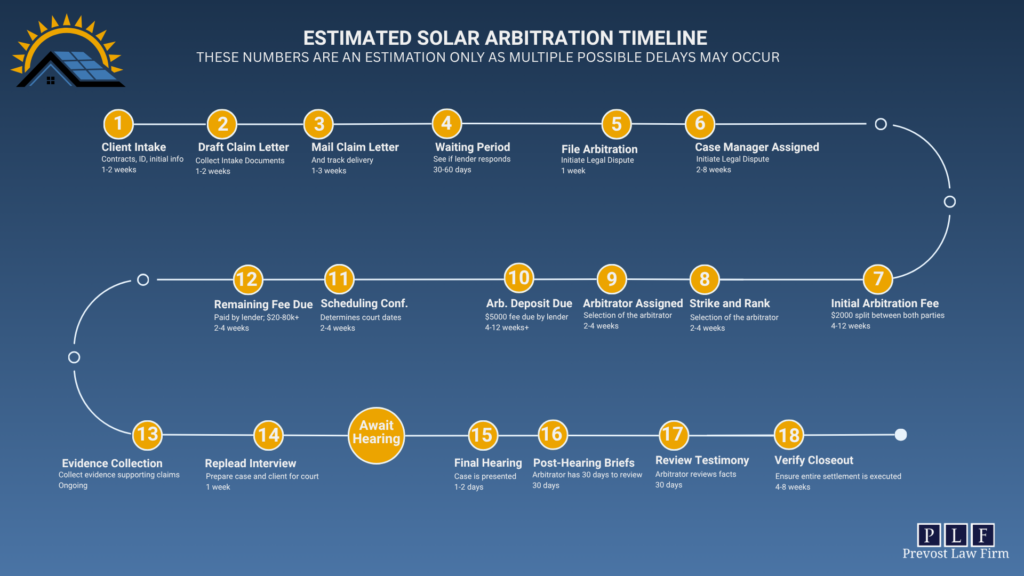
At Prevost Law Firm, one of the first steps we take is sending a demand letter to the lender. This letter challenges the loan, documents your claims, and formally requests relief. Whether that’s canceling the debt, reducing the balance, or releasing the lien.
Sending the demand letter before any payoff achieves two things:
- Preserves leverage. The lender knows you are not simply accepting the terms of the loan.
- Protects legal claims. If the case goes to arbitration or litigation, the demand letter shows you acted in good faith and notified the lender of the issues.
If you pay off the loan before taking legal action, you eliminate your leverage to negotiate. Prevost Law Firm’s strategy focuses on holding the lender accountable for predatory or unlawful lending practices. Once the loan is paid in full, there’s no active lender relationship to challenge.
What Happens If You’re Moving
Many homeowners face this issue when they are preparing to move. Here’s the catch:
- If you pay off the loan at closing just to transfer the house, you may lose your ability to challenge the loan.
- If you delay paying until after legal action, you preserve your rights but may complicate the timing of the sale.
The right answer depends on your circumstances. Sometimes, it makes sense to hold off on closing until the demand letter process begins. Other times, creative negotiation allows the home sale to proceed while legal claims are still active.
The key takeaway: Don’t assume paying off the loan is the only option. Talk with a lawyer before you sell or refinance.
Is It Harder to Sell a House With Solar Panels?
It can be harder to sell a house with solar panels when there is still a solar loan, lease, or other financial obligation attached to the system. The panels themselves may not prevent a sale, but the agreement behind them can create additional steps for both the seller and buyer.
For example, an outstanding solar loan or UCC filing may need to be addressed before closing. Depending on the agreement, the homeowner may be asked to pay off the remaining balance, transfer the obligation to the buyer, or take other steps required by the solar lender or financing company.
For homeowners who are already unhappy with their solar system or believe they were misled when entering the agreement, paying off or transferring the solar obligation simply to complete a home sale can have additional consequences. Before agreeing to a payoff or transfer, consider having your solar agreement and circumstances reviewed so you understand how the decision could affect your options.
Should I Buy a House With Leased Solar Panels?
If you are considering buying a house with leased solar panels, review the solar agreement carefully before agreeing to take over the system. A solar lease can come with an existing contract, monthly payments, transfer requirements, and other terms that may continue after ownership of the home changes.
Ask who owns the panels, how much time remains on the agreement, what payments are required, and whether the solar company must approve a transfer. You should also understand what happens at the end of the lease and whether there are costs associated with removing or purchasing the system.
For sellers, these same issues are important because a prospective buyer may not want (or qualify) to assume the existing solar agreement. Understanding the contract before listing or closing on the home can help identify potential complications before they interfere with the sale.
The Panels Themselves: Another Layer of Risk
Even if you dislike the panels or want them removed, lenders may argue that they have a right to reclaim them. This is especially true if the loan goes unpaid or is disputed.
That means:
- If you move: The lender could still try to recover the panels from your old property.
- If you keep the house: The panels may remain tied to the lien, limiting your ability to refinance or borrow against your equity.
In both cases, addressing the contract before payoff is essential.
Why Paying Off Your House Isn’t Always Simple
For homeowners without solar panels, paying off a mortgage clears the title and simplifies ownership. With solar, it’s different:
- The lien stays in place until the solar loan is addressed.
- Paying off the home doesn’t erase the solar loan obligation.
- Title companies may refuse to clear closing until the solar debt is resolved.
This creates a frustrating cycle: you want to pay off the home, but the solar loan blocks the process. Acting in the wrong order can trap you with panels you don’t want and a loan you shouldn’t owe.
Steps to Take Before Paying Off Your Home
If you have unwanted solar panels and are close to paying off your mortgage, here are the steps we recommend:
- Review your loan documents. Check for UCC filings, liens, or contract terms that limit transfer or payoff options.
- Consult with a lawyer. An attorney experienced in solar disputes can tell you whether you have grounds to challenge the contract. Get a no-cost claim review here.
- Send a demand letter first. Do not pay off the solar loan until your attorney has the chance to formally challenge it.
- Plan for your move. If you’re selling your home, talk with your attorney about timing the demand letter so it doesn’t delay closing.
- Document everything. Keep records of communications with the lender, promises made by the installer, and proof of non-performance (like failed inspections or high utility bills).
Important note: In every legal dispute, the person you are suing has a right to access the evidence of the claims being made against them. This means that the ideal scenario to protect your claims involves offering your lender the opportunity to perform a site survey before you move so that they can collect your evidence: which is the current status of your unaltered system.
What If You Already Paid Off the Loan?
If you’ve already paid off your solar loan to complete a refinance or home sale, you may still have options, but the road is harder. In many cases, lenders argue that payoff equals acceptance.
That’s why timing is critical. Acting before payoff gives you the best chance at relief.
Final Thoughts
Paying off your home should be a time of joy, not stress. But solar loans and liens complicate the process for thousands of families. If you are nearing the end of your mortgage and have unwanted solar panels, resist the urge to rush.
Before you make your final payment, consult with a law firm that understands these contracts. At Prevost Law Firm, we fight to protect homeowners from predatory solar financing. Our team can review your documents, send a demand letter, and help preserve your rights…before it’s too late.
Call to Action
If you’re preparing to pay off your house but still have an outstanding solar loan, don’t wait. Contact Prevost Law Firm today for a no-cost claim review. We’ll help you understand your options and protect your financial future.
Go here to begin your no-cost claim review.
This content is for informational purposes only and does not constitute legal advice or create an attorney-client relationship.