This content is for informational purposes only and does not constitute legal advice or create an attorney-client relationship.
You were told your solar panels failed inspection. Now what?
A failed solar inspection can be frustrating, especially if you thought your installation was already complete and the loan payments have already started. But a failed inspection does not necessarily mean your solar project is over.
In many cases, the next step is to identify the deficiencies, correct them, and satisfy the local permitting authority. The exact process varies by location because permitting and inspection requirements are set by local authorities.
What Does It Mean When Solar Panels Fail Inspection?
A solar inspection is generally performed after installation to determine whether the system was installed in accordance with applicable safety and code requirements. The inspection may involve the solar panels, mounting system, electrical work, equipment, wiring, labeling, and other parts of the installation.
Want Help From The Law Firm Solely Focused on Solar Panel Lawsuits?
Click below and complete the form to learn more.

A failed inspection generally means the inspector identified one or more issues that must be addressed before the project can receive the required approval. The reason for the failure should be documented in an inspection report, correction notice, or other documentation from the permitting authority.
Common issues can include:
- Electrical wiring or connection problems — Such as loose or damaged wires.
- Grounding or bonding issues — Such as missing grounding connections.
- Incorrect equipment installation — Equipment installed against manufacturer instructions.
- Structural or mounting concerns — Including loose panel mounts.
- Missing or incorrect labels — For example, missing shutoff labels.
- Equipment or system layouts that don’t match the approved plans — Such as panels in different locations.
- Permit or documentation problems — Including missing permits or paperwork.
- Other code or safety deficiencies identified by the inspector — Additional hazards noted during inspection.
The exact requirements depend on the location, the system, and the authority having jurisdiction (AHJ), which is usually your city or county permitting office.
What Happens After a Solar Inspection Fails?
There is no single process that applies to every solar installation. Depending on the jurisdiction and the reason for the failure, the next steps may include:
- Reviewing the inspection report or correction notice
- Identifying each deficiency
- Determining who is responsible for correcting it
- Making the required corrections
- Submitting revised plans or documentation if required
- Requesting another inspection if required
- Obtaining final approval
- Completing any remaining utility interconnection requirements for a grid-connected system
The installer should be able to explain what caused the failure and what needs to be corrected. If you are unsure whether the explanation you received matches the inspection report, ask for the inspector’s findings and the specific requirement that was not satisfied.
Can You Use Your Solar Panels After They Fail Inspection?
For a grid-connected solar system, you generally should not assume the system is ready to operate simply because the panels have been physically installed. The U.S. Department of Energy explains that permitting and inspection are generally required before a rooftop solar array is allowed to produce electricity on the grid. After the required inspection and approvals, the utility can connect the system to the grid. The exact process varies by jurisdiction and utility.
That means there can be several separate milestones:
Installation → Inspection → Required Corrections → Approval → Utility Interconnection
Panels on the roof don’t necessarily mean every approval has been completed, or that you have permission to operate (PTO). That gap is why some homeowners end up making payments on a system that isn’t producing any usable electricity yet.
Who Is Responsible for Fixing a Failed Solar Inspection?
This depends on why the project failed, what your contract says, and which party was responsible for the problem.
If the failure resulted from the installer’s workmanship, installation, or failure to follow the approved plans, the installer may be responsible for correcting the issue under the contract. But not every inspection failure automatically means the installer is legally responsible for every resulting cost. For example, the issue could involve:
- A homeowner-requested change — For example, moving the panels.
- A change in project specifications — Including a different inverter model.
- Incorrect information provided during the permitting process — Like listing the wrong system size.
- A local requirement that was not properly addressed — Required roof setbacks, for instance.
- Utility requirements — Meter or connection upgrades, for example.
- An issue outside the installer’s contractual responsibilities — One example is preexisting roof damage.
Start by comparing the inspection report with your contract, approved plans, and communications with the installer.
Does Your Solar Warranty Cover a Failed Inspection?
It may, depending on why the system failed and which warranty applies. Most solar systems don’t come with a single warranty. They usually come with several, and each one covers something different:
- Manufacturer (product) warranties generally cover defects in the equipment itself, such as the panels, inverters, or batteries.
- Workmanship (installation) warranties generally come from the installer and cover problems caused by how the system was installed.
- Roof penetration warranties, when included, generally cover leaks or damage around the points where the system is mounted to your roof.
Many inspection failures come down to installation issues like wiring, grounding, labeling, or a system that doesn’t match the approved plans. Those problems may fall under the installer’s workmanship warranty or the installer’s obligations under the contract, not the equipment manufacturer’s warranty. If a defective part caused the failure, the manufacturer’s warranty may come into play instead.
Your actual coverage depends on the warranty and contract terms, so compare the inspection report with each warranty before you agree to pay for corrections. Here’s a closer look at manufacturer versus installation warranties and how to tell which one applies.
If the installer has gone out of business, its workmanship warranty may be difficult or impossible to enforce, even though equipment warranties may still be available through the manufacturer. Before anyone else works on the system, check what can void your solar panel warranty.
What If You Think the Inspector Is Wrong?
If you disagree with the inspection result, don’t rely only on a verbal disagreement with the installer. Ask for the inspection findings in writing. You can also ask:
- What specific requirement was not met, and where is that requirement found?
- What correction is required?
- Does the permit need to be revised?
- Is another inspection required?
- Who is responsible for making the correction, and will it create an additional charge?
The inspector represents the permitting authority, while the installer is generally responsible for performing the contracted work in compliance with applicable requirements. If there is a genuine disagreement about what the authority requires, the issue may need to be addressed with that authority rather than resolved solely between you and the installer.
In some cases, an independent solar inspection company can give you a second look at the installation.
Can a Failed Solar Inspection Result in Extra Charges?
Not automatically. Whether you have to pay additional money depends on the reason for the correction, your contract, and the circumstances that caused the problem. A contract may address who pays for corrections required because of installation errors, while customer-requested changes or work outside the original scope may be treated differently.
Before paying an unexpected invoice, ask the installer what caused the additional work, what part of the contract allows the charge, and whether the work is covered by an existing warranty or contractual obligation.
What If the Installed Solar System Does Not Match the Approved Plans?
This can create a serious permitting issue. The installed system may need to match the plans and specifications approved by the permitting authority. If equipment or system configurations changed during the project, the authority may require revised plans or other approval.
Some local governments use automated permitting platforms, which can generate inspection checklists based on the approved design. These platforms are not used everywhere, so check the requirements of the specific jurisdiction handling your permit.
How Long Does It Take to Fix a Failed Solar Inspection?
There is no universal timeline. It can depend on the type of correction, whether parts or revised plans are needed, the availability of the installer and inspector, local permitting procedures, utility requirements, and whether additional inspections are required.
A failed inspection can delay the point at which a system receives all required approvals and, for a grid-connected system, permission to operate. If the installer tells you there will be a delay, ask for a specific explanation and a written timeline for the corrective work.
What If the Installer Is Not Fixing the Problem?
This is where documentation becomes particularly important. Keep a record of the inspection failure, the inspector’s written findings and the date, the corrections requested, your contract, permits and approved plans, invoices and payment records, financing documents, photographs of the installation, and every communication with the installer.
Then send the installer a clear written request asking what will be done to correct the inspection failure and when the work will be completed.
If the installer refuses to address a problem that appears to be within its contractual responsibilities, you may need to consider additional options depending on the facts and applicable state law. Those options could include reviewing the contract’s dispute-resolution provisions, making a warranty claim, contacting the applicable licensing or regulatory authority (in Texas, the Texas Department of Licensing and Regulation oversees residential solar retailers and electrical contractors), or seeking legal advice.
What If My Solar Installer Goes Out of Business?
An installer going out of business can make a failed inspection more complicated. You may have several different relationships connected to the project, including the installer, a sales company or dealer, a financing company, an equipment manufacturer, a warranty provider, the utility, and the permitting authority. These relationships may involve separate contracts and obligations. Here’s more on what happens to your loan when a solar company goes out of business.
Another contractor may be able to assess or correct the installation, but understand who will be responsible for the cost before authorizing substantial work. It’s also worth checking whether outside work could affect your coverage, since some actions can void a solar panel warranty.
Should You Stop Making Solar Loan Payments?
A failed inspection does not automatically cancel or suspend a financing agreement. If your installation was financed, your loan may impose payment obligations that are separate from the installer’s obligations, so a problem with the installation doesn’t automatically end the loan.
Whether to continue making payments is an individual decision. Stopping payments may result in late fees, negative credit reporting, collection activity, or other consequences under the loan agreement, potentially including acceleration of the balance. Continuing payments may avoid some of those consequences while a dispute is pending. Review the financing agreement and talk with an attorney before deciding. Read more about whether to keep paying your solar loan or stop.
Depending on how the transaction was structured and the contract language involved, the FTC Holder Rule may allow certain claims or defenses related to the seller’s conduct to be asserted against a holder of the financing agreement.
Can a Failed Solar Inspection Give You a Legal Claim?
Possibly, but a failed inspection by itself does not automatically establish that the solar company is legally liable, or that you are entitled to a refund. Whether you may have a claim, and what remedies might be available, can depend on:
- What the installer promised and what the contract requires — Including equipment and completion dates.
- Why the system failed and who caused the problem — For example, an installer’s wiring error.
- Whether the installer can or will correct it — Repair plans or past attempts.
- Your financing arrangement and applicable state law — Loan terms and state protections.
- The financial losses you experienced — Like repair costs or higher bills.
A failed inspection can be important evidence, but it is only one part of the overall situation. A system that can’t be brought into compliance, or an installer that refuses to perform its contractual obligations, may present different legal options than an installer that promptly corrects a minor issue.
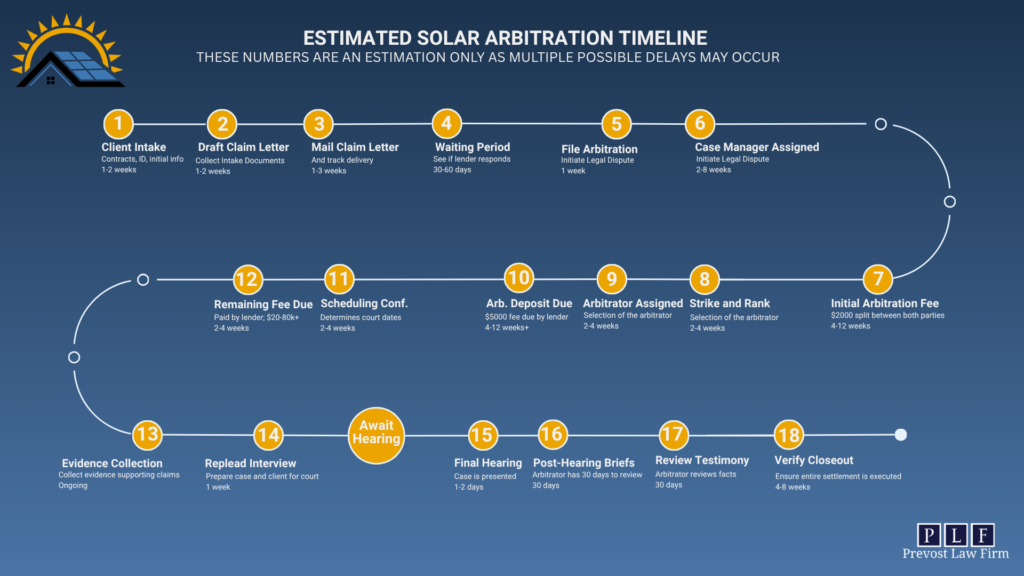
Many solar contracts and financing agreements also contain arbitration provisions that may require disputes to proceed through individual arbitration rather than court. And depending on the facts, you may be able to take legal action against both your solar company and your solar lender.
How Prevost Law Firm Can Help
Prevost Law Firm handles disputes involving solar installers, lenders, financing companies, and related parties, including systems that never passed inspection or never received permission to operate. We start with a no-cost claim review of your contract, loan documents, and situation, then explain what claims may be available and what they would cost to pursue.
Depending on the facts and applicable law, potential outcomes for a system that never worked or never received PTO may include loan cancellation, payment refunds, removal of UCC filings, or credit-related relief. Every case is different, and prior results do not guarantee a similar outcome. You can see potential outcomes in a solar panel lawsuit or read Jonathan’s story about an inoperable solar system and mounting debt.
What Should I Do If My Solar Panels Failed Inspection?
If you are dealing with a failed solar inspection, start with these steps:
- Get the inspection results in writing.
- Find out exactly what failed, item by item.
- Compare the installed system with your approved plans.
- Review your contract. Look for provisions covering corrections, warranties, additional work, delays, cancellation, and disputes.
- Ask the installer for a correction plan. Get the proposed work and timeline in writing.
- Ask whether revised plans, permits, or approvals are required.
- Keep every document, including photos, emails, texts, invoices, and financing documents.
- Don’t assume your financing automatically stops. Review the financing agreement and get advice before changing your payments.
- Escalate if the installer refuses to act, using the dispute-resolution options in your contract.
- Get legal advice if the dispute becomes serious. An attorney can review your specific circumstances and explain your options.
Frequently Asked Questions
Can I use my solar panels if they failed inspection?
For a grid-connected system, you generally should not assume the system is authorized to operate simply because installation is complete. Required permitting, inspection, and utility interconnection steps must be satisfied according to local and utility requirements.
Can I cancel my solar contract after a failed inspection?
Not necessarily. Cancellation rights depend on the contract and applicable law. Review your agreement for cancellation, breach, warranty, and dispute-resolution provisions, and learn more about when a solar contract cancellation lawyer may be able to help.
What if my solar installer refuses to fix the failed inspection?
Document the inspection failure and your communications with the installer, and ask the installer in writing for a correction plan. If the company refuses to address an issue that appears to be its responsibility, you may need to consider contractual, regulatory, or legal remedies.
Final Thoughts
A failed solar inspection is frustrating, especially when the payments keep coming for a system you can’t use yet. But it does not necessarily mean your project has failed permanently.
Don’t assume a failed inspection automatically means the installer is liable. At the same time, you don’t have to simply accept an unresolved problem or an unexpected charge. If the installer refuses to correct the issue, your project remains incomplete, or you believe the company breached its agreement, we’ll review your situation and help you understand the options that may fit your circumstances. For related reading, see how equipment recalls and failed inspections can affect solar loan contracts.
This content is for informational purposes only and does not constitute legal advice or create an attorney-client relationship.
References
- U.S. Department of Energy – Permitting and Inspection for Rooftop Solar
- U.S. Department of Energy – Walk Me Through It: A Step-by-Step Guide for Consumers Going Solar
- U.S. Department of Energy – Solar Power in Your Community
- U.S. Department of Energy – Solar Permitting Guidebook
- Texas Department of Licensing and Regulation – Residential Solar Retailers
This content is for informational purposes only and does not constitute legal advice or create an attorney-client relationship.