This content is for informational purposes only and does not constitute legal advice or create an attorney-client relationship.
At Prevost Law Firm, we focus on a specific type of solar-panel case. These usually involve situations where the lender is legally responsible under consumer protection laws like the Holder Rule.
Because of that, not every homeowner who contacts us will qualify for representation.
If you recently found out that we’re unable to take your case, please know this doesn’t mean you’re out of options. There are still meaningful steps you can take to protect yourself and seek accountability.
Contact Your State Attorney General’s Office
Your State Attorney General (AG) is one of the best first points of contact if you believe you’ve been treated unfairly or misled.
Want Help From The Law Firm Solely Focused on Solar Panel Lawsuits?
Click below and complete the form to learn more.

Most AG offices have a consumer-protection division that handles issues involving deceptive sales, unfair lending practices, or contract violations.
When you file a complaint, it not only helps your individual situation but can also bring attention to larger patterns of misconduct if many homeowners report similar experiences. The AG’s office may mediate between you and the company or open an investigation if warranted.
Filing a complaint with the AG doesn’t guarantee that they will take up your case or get you the resolution you are looking for.
File an Arbitration Claim on Your Own
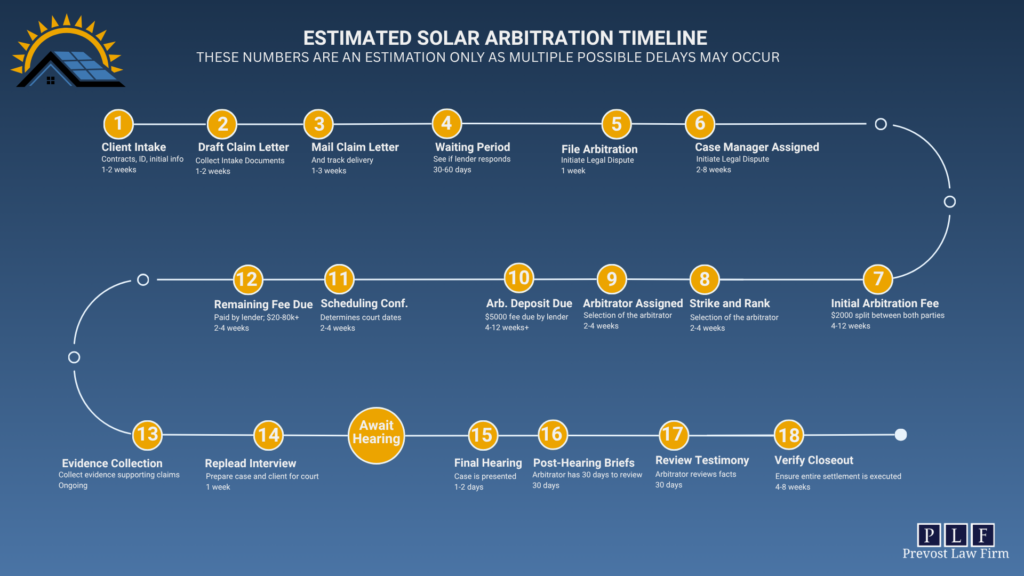
Most solar contracts include an arbitration clause. In these cases, you can initiate the process yourself through JAMS or the American Arbitration Association (AAA).
To do this, you’ll need to gather your solar contract, loan agreement, and any supporting evidence. Evidence includes items such as photos, emails, or repair requests that show the problem.
You’ll also submit a short written statement describing what happened and what relief you’re seeking.
Arbitration can feel overwhelming. It’s not a simple “Judge Judy” situation. You’re going up against an experienced legal team, and very few homeowners handle the process on their own. It requires patience, organization, and at least some legal know-how to navigate successfully.
Report the Issue to the FTC and CFPB
It can also be helpful to report your experience to federal agencies such as the Federal Trade Commission (FTC) and the Consumer Financial Protection Bureau (CFPB).
These organizations collect consumer complaints and track patterns of deceptive behavior across the country.
Filing a report online only takes a few minutes, and while it doesn’t automatically resolve your case, it contributes to broader enforcement actions against bad actors in the solar and lending industries.
Contact an Alternative Attorney
Even if Prevost Law Firm cannot represent you, other attorneys may be able to help.
Each firm has different case criteria, and your situation may fall within another firm’s focus area. Look for an attorney who handles consumer-protection or breach-of-contract cases in your state.
If your installer is still in business, a local lawyer might be able to pursue direct action against them. You can contact your state Bar Association for referrals to licensed attorneys with relevant experience.
Prevost Law Firm specifically focuses on breach of contract, but other attorneys have other focuses.
What To Look For
There are several red flags to look out for. There are companies out there that are trying to scam consumers and are not real lawyers.
- When selecting an attorney, make sure they can tell you step by step what they plan to do. A trustworthy lawyer should clearly explain their process, from filing your claim to how they’ll communicate updates along the way. If they can’t outline specific next steps, it may be a sign they lack experience with your type of case.
- If they say they work for a law firm, but are not actually a law firm. Some marketing companies pose as law firms to collect leads and sell them to real attorneys. Always confirm the person you’re speaking with is licensed and that the firm’s name matches official listings with your state bar.
- Lawyers cannot make guarantees. If someone tries to guarantee a result, they are not a real lawyer (or they’re violating the BAR). Ethical attorneys will never promise a specific outcome because every case depends on unique facts and legal factors. If someone claims they can “guarantee” a win or a payout, that’s a major red flag for unethical or unlicensed behavior.
Consumer Protection Attorney
If your experience involves deceptive sales tactics, false promises about energy savings, or misleading contract terms, a consumer protection attorney may be the right fit. These lawyers specialize in cases where businesses engage in unfair or deceptive practices that harm consumers. They can evaluate whether your situation qualifies under federal or state consumer protection laws, such as the Federal Trade Commission (FTC) Act or your state’s version of the Deceptive Trade Practices Act (DTPA).
A consumer protection attorney can help you pursue compensation for financial losses, emotional distress, or even punitive damages in cases of intentional misconduct. They can also void or modify contracts signed under false pretenses. Many offer free consultations or work on contingency. This means they only get paid if you recover money.
Breach of Contract
If your issue centers around a breach of agreement, such as a solar installer failing to complete installation, honor a warranty, or deliver on specific terms, this is possibly a breach of contract issue.
A consumer protection attorney can review your contract to pinpoint where obligations weren’t met, gather evidence of violations, and determine whether you’re entitled to financial recovery or contract cancellation.
Attorneys often resolve breach of contract issues through negotiation or mediation, but they can also take formal legal action if necessary. Acting quickly helps protect your claim and increases the chances of recovering your losses before more financial harm occurs.
DTPA
In many states, including Texas, consumers are protected by laws such as the Deceptive Trade Practices Act (DTPA). This act allows individuals to sue businesses that use deceptive or misleading business practices. The DTPA focuses specifically on these types of cases and can assess whether your situation qualifies under state law.
The DTPA helps you recover damages when a company misrepresents a product or service, fails to disclose critical information, or engages in false advertising. In some cases, courts may also award additional damages if the company acted intentionally or knowingly. It also helps you take powerful legal action when your losses result from false claims about cost savings, performance guarantees, or system maintenance that were never delivered.
Stay Informed About Future Opportunities
The solar industry is changing rapidly, and so are the legal options available to homeowners. New settlements, lender negotiations, or company bankruptcies can shift what’s possible in the future. Even if you don’t qualify right now, we encourage you to stay informed.
Joining our waitlist ensures you’ll be notified if circumstances change or if we’re able to reopen certain types of cases. You can also follow our blog for updates about arbitration trends, lender settlements, and consumer-protection developments.
Go here to stay informed about your potential case.
A Final Word
We understand how stressful and frustrating it can be to face issues with your solar system or loan, especially after hoping it would save you money and energy.
Not qualifying for representation doesn’t mean you’re out of options. It just means your path to resolution might look a little different. Taking action through your state AG, arbitration, or another firm still gives you a chance to be heard and to move toward relief.
If your circumstances change, we’ll be here to reassess your case and help you take the next step when the time is right.
This content is for informational purposes only and does not constitute legal advice or create an attorney-client relationship.