This content is for informational purposes only and does not constitute legal advice or create an attorney-client relationship.
Were you promised significant savings on your electricity bills after installing solar panels, only to find your financial burden has actually increased? Unfortunately, you’re not alone. A staggering 85% of solar panel systems are financed, and many homeowners discover too late that their agreements contain hidden fees or unrealistic promises. In fact, according to EnergySage, fees for the most popular solar loans averaged 47% during the last half of 2023.
Solar panel fraud has become increasingly common, with companies using deceptive marketing and high-pressure sales tactics to mislead consumers. Recently, Los Angeles County reached a $12 million settlement with solar panel customers who alleged predatory lending practices. These companies frequently make false claims about guaranteed energy savings that never materialize or hide escalating monthly payments and undisclosed maintenance costs.
If you’re wondering how solar companies rip you off and what legal options you have, Prevost Law Firm can help.
As experienced solar panel fraud attorneys, we understand the frustration and financial strain these situations cause.
This guide explains how to recognize if you’ve been misled, what legal protections exist for solar customers, and specifically how a solar panel attorney can help you recover your losses or potentially cancel your contract.
Want Help From The Law Firm Solely Focused on Solar Panel Lawsuits?
Click below and complete the form to learn more.

Common Ways Solar Companies Mislead Homeowners
The solar industry remains relatively unregulated compared to sectors like real estate, creating opportunities for unscrupulous companies to take advantage of homeowners. As complaints against residential rooftop solar companies have increased more than 1,000% since 2018, understanding these deceptive practices is crucial before considering legal action.
False promises of energy savings
Many solar companies falsely claim you’ll “never pay another electricity bill” once panels are installed. This is simply untrue. Utility companies still charge monthly interconnection fees for remaining tied to the grid. Additionally, some companies deliberately oversize systems, causing you to overpay for excess electricity that won’t financially benefit you. While net metering credits are available, they rarely offset your solar expenses completely.
Misleading tax credit claims
Unscrupulous companies frequently misrepresent the federal solar tax credit (currently 30% through 2032). Some falsely create urgency by claiming “the credit ends this month” or guarantee tax benefits even if you don’t qualify. Others promise government rebate checks in the mail or claim you’re automatically eligible regardless of your tax situation. Remember, this non-refundable credit only benefits those with sufficient tax liability.
Hidden fees in financing agreements
Perhaps most troubling are the “dealer fees” quietly built into solar loans. These markups often increase loan costs by 30% or more above the cash price without being included in the stated APR. For example, a $30,000 system could actually cost $37,500 after adding a 25% dealer fee. Many contracts also include balloon payments, escalating monthly costs, and misleading “no upfront cost” claims that ultimately extend your payback period.
High-pressure sales tactics
Be wary of salespeople pushing for what’s called a “one-sit close”—getting you to sign during your first meeting. They create false urgency with claims about “disappearing deals” or incentives that are allegedly ending soon. Some companies even present “permission forms” that are actually binding contracts. Others create fake email addresses for technologically unsavvy customers to forge electronic signatures. These tactics deliberately rush you through a decision that requires careful consideration.
Not delivering what was promised
Another common issue is when the solar system simply doesn’t perform as advertised. Salespeople may have promised lower bills, higher energy production, or certain rebates that never materialize once the system is installed. In some cases, panels are installed incorrectly or use substandard equipment, leading to frequent malfunctions and costly repairs. When what you signed up for doesn’t match the reality of what you received, this may amount to fraud or breach of contract.
Abandoning customer warranties
Homeowners are often sold long-term warranties (20 or even 25 years) as reassurance that their investment is protected. Unfortunately, many companies fail to honor these commitments. Customers report being ignored when they call for service, told their warranty “doesn’t cover” basic issues, or shuffled between the installer and the financing company with no resolution. A warranty is only as good as the company that stands behind it, and when that promise is broken, consumers may have strong legal claims.
How to Know If You’ve Been a Victim of Solar Panel Fraud
Recognizing the warning signs of solar panel fraud can save you time, money, and significant stress. Nevertheless, many homeowners only realize they’ve been misled after months or years of financial hardship. Here’s how to determine if you’re dealing with a legitimate problem that might require a solar panel attorney.
Installer went out of business and left you without a warranty
One of the most devastating scenarios is when the installer goes bankrupt or shuts down, leaving homeowners stranded. Suddenly, the 25-year workmanship warranty becomes worthless, and you’re stuck paying for both a loan and repairs on a system no one will service. This has already happened to thousands of homeowners with companies like Pink Energy and Titan Solar. The good news: under the FTC’s Holder Rule, you may still be able to pursue claims against the lender, even if the installer no longer exists.
Your energy bills haven’t decreased
Despite promises of substantial savings, your utility bills remain unchanged or have actually increased. This often occurs because salespeople exaggerated potential production or failed to account for utility rate structures. Consequently, you’re paying both your solar loan and electricity bills, creating a financial burden instead of relief.
You’re locked into a long-term loan you didn’t fully understand
Many victims discover escalating monthly payments or balloon payments that weren’t clearly explained. Furthermore, loan terms frequently extend 20-25 years, often longer than the system’s warranty. If you’re struggling with payments that seem different from what was initially discussed, this suggests potential misrepresentation requiring legal intervention.
You were rushed into signing a contract
High-pressure tactics are a hallmark of solar panel fraud. Initially, you may have been told the deal was “today only” or that incentives were “expiring immediately.” If you felt pressured to sign without adequate time to review documents or consult with family members, this constitutes a serious red flag.
The system underperforms or malfunctions
When your system consistently generates less electricity than promised or experiences frequent technical issues, you might be a victim of fraud. Indeed, some companies install substandard equipment or improperly size systems to maximize their profits at your expense.
You discovered a lien on your home
Perhaps most alarming, homeowners sometimes learn about liens on their property only when trying to refinance or sell. These liens, sometimes placed without clear disclosure, can seriously impact your ability to make important financial decisions about your home.
If you’ve experienced any of these situations, consulting with a lawyer for solar panel fraud is crucial. Legal professionals with experience in solar fraud can evaluate your contract, identify violations, and determine whether you have grounds to pursue compensation or contract cancelation.
Legal Rights and Protections for Solar Customers
If you’ve fallen victim to solar panel fraud, understanding your legal rights is essential. Fortunately, several powerful legal protections exist to help you fight back.
Truth in Lending Act (TILA)
TILA requires solar lenders to disclose all key terms and costs in financing agreements. This federal law applies directly to solar financing and helps identify deceptive terms. Congress has even proposed legislation to strengthen TILA by specifically requiring disclosure of dealer fees in solar transactions.
State consumer protection laws
Many states now have specific solar consumer protection laws in place. For example, Texas’s Residential Solar Retailer Regulatory Act (SB 1036) begins enforcing key safeguards, including a five-business-day cancellation right and mandatory disclosures, on September 1, 2025, with full implementation phased through 2026. Meanwhile, California has required solar providers since January 1, 2021 to supply and have homeowners sign the first few pages of its official Solar Consumer Protection Guide before finalizing contracts.
Deceptive Trade Practice Act
Copy
FTC rules on deceptive energy claims
The Federal Trade Commission prohibits companies from making misleading claims about energy savings. Under Section 5 of the FTC Act, solar businesses must be truthful about costs, financing options, and potential savings. The FTC’s Green Guides specifically address renewable energy marketing claims.
Holder Rule
This powerful FTC holder rule makes solar lenders accountable for seller misconduct. Under the Holder Rule, you can bring the same claims against your lender that you could against the installer, especially important if your installer goes bankrupt.
What to do if your contract includes arbitration clauses
Many solar contracts contain arbitration clauses requiring disputes to be resolved privately rather than in court. However, courts may declare these clauses unenforceable if they’re procedurally unconscionable—buried in fine print or not explained properly. Alternatively, proposed federal legislation aims to prohibit mandatory arbitration in solar financing.
How a Solar Panel Fraud Attorney like Prevost Law Firm Can Help You
Taking legal action against deceptive solar companies requires experience. Prevost Law Firm, the nation’s leading team for solar panel lawsuits, has handled thousands of cases nationwide. Here’s how a solar panel attorney can help when you’ve been misled.
Reviewing your contract and identifying fraud
A skilled lawyer for solar panel fraud begins by meticulously examining your solar agreement to identify violations. Attorneys carefully review contracts for deceptive clauses, hidden fees, predatory terms, and non-reliance clauses that attempt to protect sellers from verbal promises made outside the written agreement. This thorough evaluation provides clarity on whether you have grounds for legal action based on fraud, misrepresentation, or non-disclosure issues.
Filing a lawsuit for misrepresentation or breach of contract
Once fraud is identified, attorneys can pursue multiple legal remedies. Under the Texas Deceptive Trade Practices Act, you may be eligible to recover treble damages. Your lawyer can file claims based on:
- Breach of contract for unfulfilled promises
- Fraudulent inducement or misrepresentation
- Deceptive trade practices violations
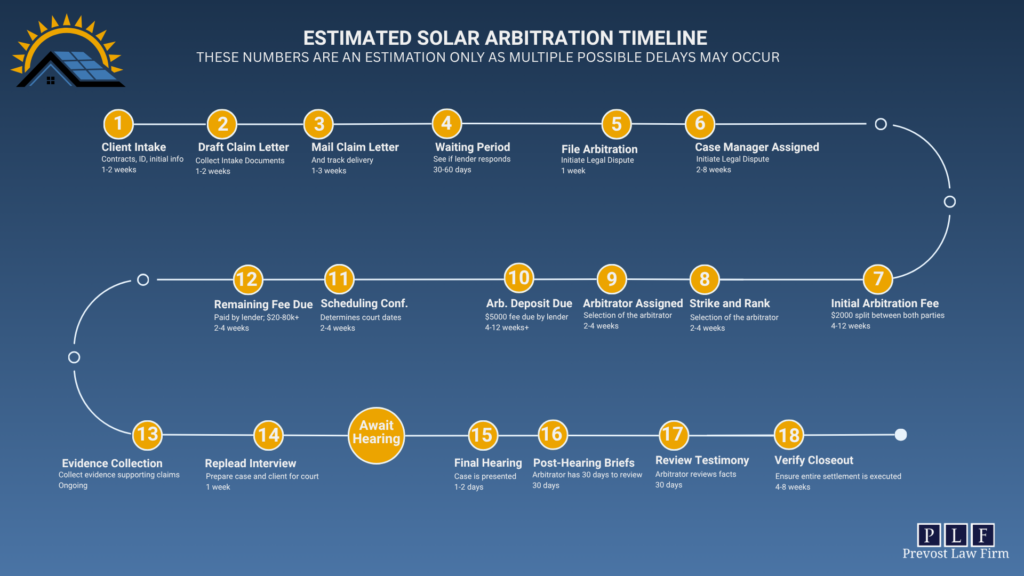
Moreover, attorneys help navigate the arbitration process, which solar contracts force consumers to use.
Helping you recover financial losses or cancel the contract
A solar panel fraud attorney can secure various remedies, including contract cancellation, refunds of previous payments, compensation for damages up to the loan balance, and correction of negative credit reporting. Notably, attorneys communicate directly with solar providers and finance companies, gathering evidence and pursuing financial compensation for damages including property issues like roof leaks.
Conclusion
The solar industry offers promising renewable energy solutions, though unfortunately, many homeowners fall victim to deceptive sales tactics and misleading contracts. As we’ve seen, solar companies frequently promise unrealistic savings, misrepresent tax credits, hide substantial dealer fees, and use high-pressure tactics to secure quick signatures. Consequently, instead of enjoying the promised financial benefits, many customers find themselves trapped in expensive long-term contracts with underperforming systems.
Thankfully, various legal protections exist for victimized solar customers. The Truth in Lending Act, state consumer protection laws, FTC regulations, and the powerful Holder Rule all provide pathways to justice. Therefore, if you suspect you’ve been misled about your solar investment, seeking qualified legal help becomes essential.
A skilled solar panel attorney will thoroughly review your contract, identify specific violations, and determine the best course of action for your situation. Whether pursuing compensation for financial losses, fighting for contract cancellation, or addressing property damage from improper installations, experienced lawyers like those at Prevost Law Firm hold deceptive solar companies accountable.
Remember, you’re not alone in this struggle. Thousands of homeowners nationwide are already fighting back against solar fraud with the help of skilled legal representation.
At Prevost Law Firm, we focus solely on solar panel lawsuits. Our attorneys understand the deceptive tactics these companies use, and we know how to hold them accountable. Rather than pouring money into a system that never delivers the savings you were promised, let us review your case and explain your options.
You don’t have to accept hidden fees, broken promises, or financial stress as your “new normal.” You deserve real solar savings, not a lifetime of debt.
📞 Contact Prevost Law Firm today for your no-cost claim review.
FAQs
Q1. How can I terminate an unfavorable solar contract? To exit a problematic solar contract, consult a solar panel attorney. They can review your agreement, identify potential violations, and explore options for termination or renegotiation based on legal protections like the Truth in Lending Act or state consumer protection laws.
Q2. What are common signs of solar panel fraud? Key indicators include energy bills that haven’t decreased as promised, unexpected increases in monthly payments, high-pressure sales tactics, system underperformance, and discovering undisclosed liens on your property. If you’ve experienced these issues, it may be time to seek legal advice.
Q3. What legal protections exist for solar customers? Solar customers are protected by various laws, including the Truth in Lending Act, state-specific consumer protection laws, FTC rules on deceptive energy claims, and the Holder Rule. These regulations help safeguard against misleading practices and provide avenues for legal recourse.
Q4. How can a solar panel attorney help if I’ve been misled? A solar panel attorney can review your contract for fraud, file lawsuits for misrepresentation or breach of contract, and help you recover financial losses or cancel the contract. They can also navigate arbitration clauses and pursue compensation for damages.
Q5. Why might my electric bill remain high despite having solar panels? High electric bills after solar panel installation could result from system underperformance, improper sizing, or misleading claims about energy savings. It’s important to have your system and contract reviewed by a professional to determine if you’ve been subject to fraudulent practices.
This content is for informational purposes only and does not constitute legal advice or create an attorney-client relationship.